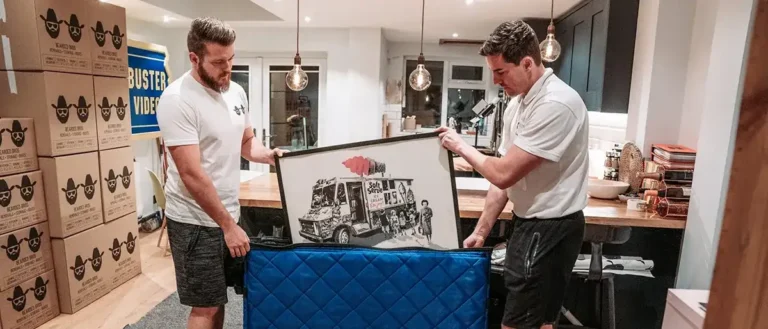
The honest answer: most people underestimate by about a third. Bearded Bros has run more than 10,000 moves out of our Brighton depot since 2013, and the single most common packing problem we see is not bad technique or fragile items -- it is simply running out of boxes on the morning of the move. This guide gives you a room-by-room breakdown so you can order the right quantity before the stress starts.
These figures are based on what our crew actually loads on a typical Bearded Bros move. They assume a normally furnished home where the occupants do their own packing. Add 15-20% if you are a collector, have a full loft, or have not decluttered recently.
After the table, every property type is covered in more detail below.
| Property size | Total boxes (estimate) | Wardrobe boxes | Large boxes | Medium boxes | Small/book boxes |
| Studio / bedsit | 15-25 | 1-2 | 4-6 | 6-10 | 5-8 |
| 1-bed flat | 25-40 | 2-3 | 8-12 | 10-16 | 7-12 |
| 2-bed flat or house | 40-60 | 3-4 | 12-18 | 15-22 | 10-18 |
| 3-bed house | 60-80 | 4-6 | 18-24 | 20-28 | 15-22 |
| 4-bed house | 80-120 | 6-8 | 24-32 | 28-36 | 20-30 |
Ranges reflect lighter versus heavier households. If you are a family of four who has lived in a 3-bed for six years, sit at the top of the range. A couple renting for two years, probably at the bottom.
Property-wide totals are useful for ordering, but it helps to know where those boxes actually go. Here is how the Bearded Bros crew typically sees a move break down by room.
Kitchens consistently take more boxes than owners expect. Plates, glassware, pots, appliances, and pantry stock add up fast. A typical kitchen in a 2-bed property needs 10-15 boxes: 4-6 small boxes for glassware and crockery (packed individually in packing paper), 2-3 medium boxes for dry goods, 2-3 medium boxes for pots, pans, and appliances, and 1-2 large boxes for lightweight bulky items like colanders and mixing bowls. If you have a well-stocked wine rack or a large coffee machine collection, add another 2-3 boxes.
The lounge looks empty but packs surprisingly full. Books are the main culprit -- they go in small boxes only (a medium box of books will snap the bottom out on the stairs). Allocate 4-6 small boxes for books and DVDs, 3-4 medium boxes for ornaments and soft furnishings, and 1-2 large boxes for cushions, throws, and lightweight decorative pieces. Pictures and mirrors travel in purpose-built picture cartons rather than standard boxes.
Clothing is the big variable. A wardrobe box (a tall, rail-fitted carton) keeps hanging clothes crease-free and saves you an hour of ironing at the other end. One wardrobe box per double wardrobe is a reasonable rule. Folded clothing, bedding, and pillows go in large boxes -- they are light but bulky, so large is correct here. Bedside tables, books, and small accessories go in medium or small boxes.
Small boxes only. Toiletries, medicines, cleaning products, and towels pack well in 3-5 small boxes per bathroom. Seal bottles in zip-lock bags before boxing them -- lids work loose in transit.
Documents, files, and books go in small boxes. Electronics (monitors, printers, desk lamps) go in medium boxes with plenty of padding. If you have original packaging for your tech, use it -- it is the best fit available. Allocate 5-8 boxes for a typical home office.
This is where estimates go wrong most often. Loft and garage contents are irregular in shape and dense in volume. Add 10-20 extra boxes if you have a full loft, a workshop, or a garage used for storage. If you have not been up there in a year, a pre-move declutter saves money and van space.
Fewer boxes is not always the goal -- you want the right number. But these steps reduce waste and cost before you place your order.
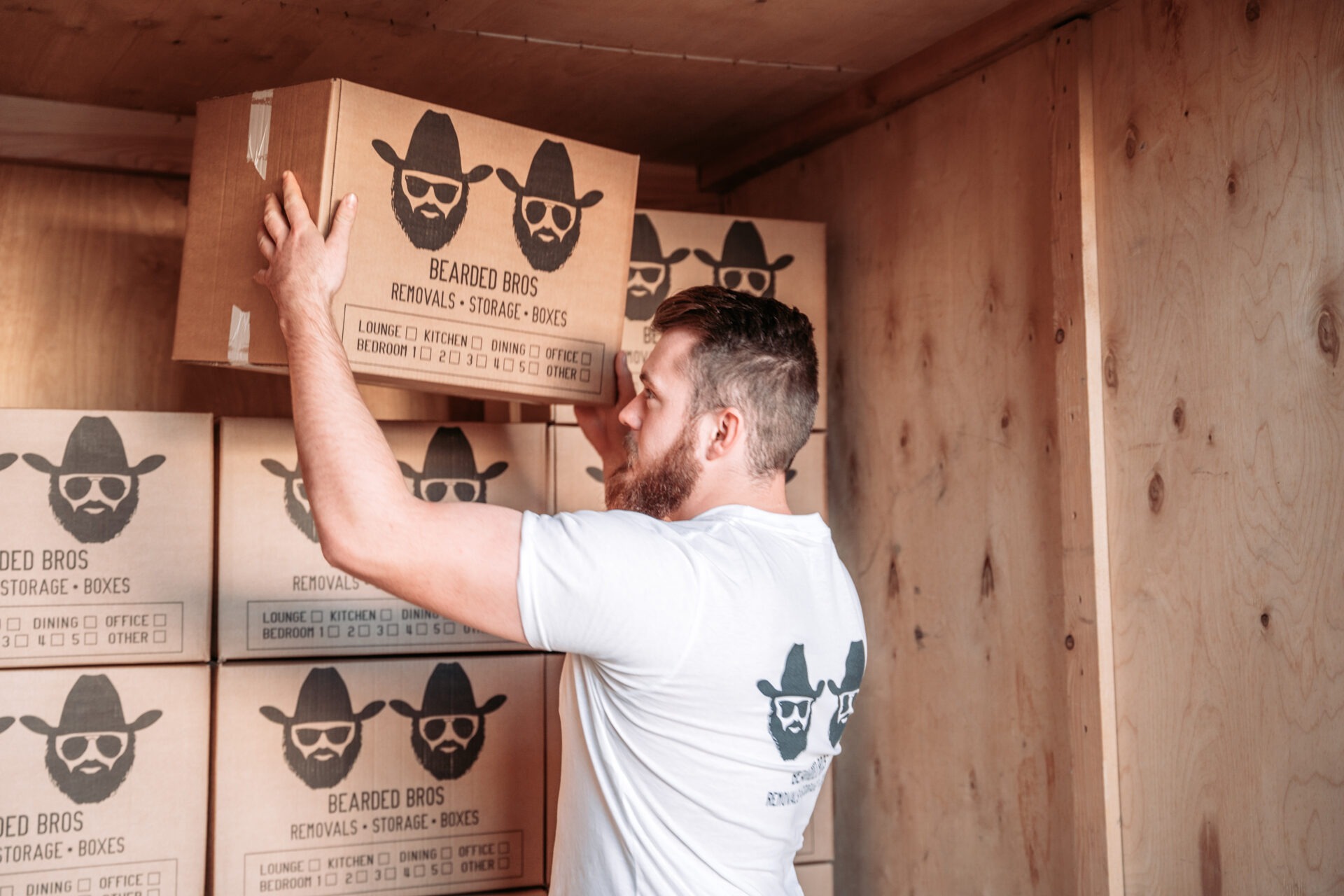
Boxes alone do not cover everything. Here is what the Bearded Bros packing list includes beyond standard cartons.
If the list above feels like a project in itself, our trained packing team can handle it for you. Full professional packing includes all materials, wrapping to a labelled room-by-room plan, and furniture dismantle where needed. You show up on move day and the boxes are already done. Read more on our packing services page.
For a quote that covers packing, boxes, and the move itself, request a removals quote and let us put together a figure for the full service.
Most one-bedroom flats need 25 to 40 boxes in total: 2 to 3 wardrobe boxes, 8 to 12 large boxes, 10 to 16 medium boxes, and 7 to 12 small or book boxes. Add 15 to 20 percent if you have a full loft, a home office, or have not decluttered recently.
Small boxes (book boxes) carry heavy items: books, files, tins, and bottled goods. Medium boxes suit most kitchen items, ornaments, folded clothing, and general household goods. Large boxes are for lightweight but bulky items: duvets, cushions, lamp shades, and bulky soft furnishings. Wardrobe boxes keep hanging clothes crease-free in transit. A typical move uses a mix of all four sizes; the room-by-room table above gives the split by property size.
A standard small moving box holds roughly 20 to 25 average paperbacks or 12 to 15 hardbacks when packed flat. Never fill a medium or large box with books: the base will give under the weight and the crew cannot safely lift it. Small boxes only for books, always.
Buying cardboard boxes makes sense if you are moving long-distance or need them weeks in advance. Hiring reusable plastic crates is the better option for local moves with a short turnaround: they are sturdier, stackable, and you return them after unpacking. Bearded Bros offers both through the box shop and the crate hire range.